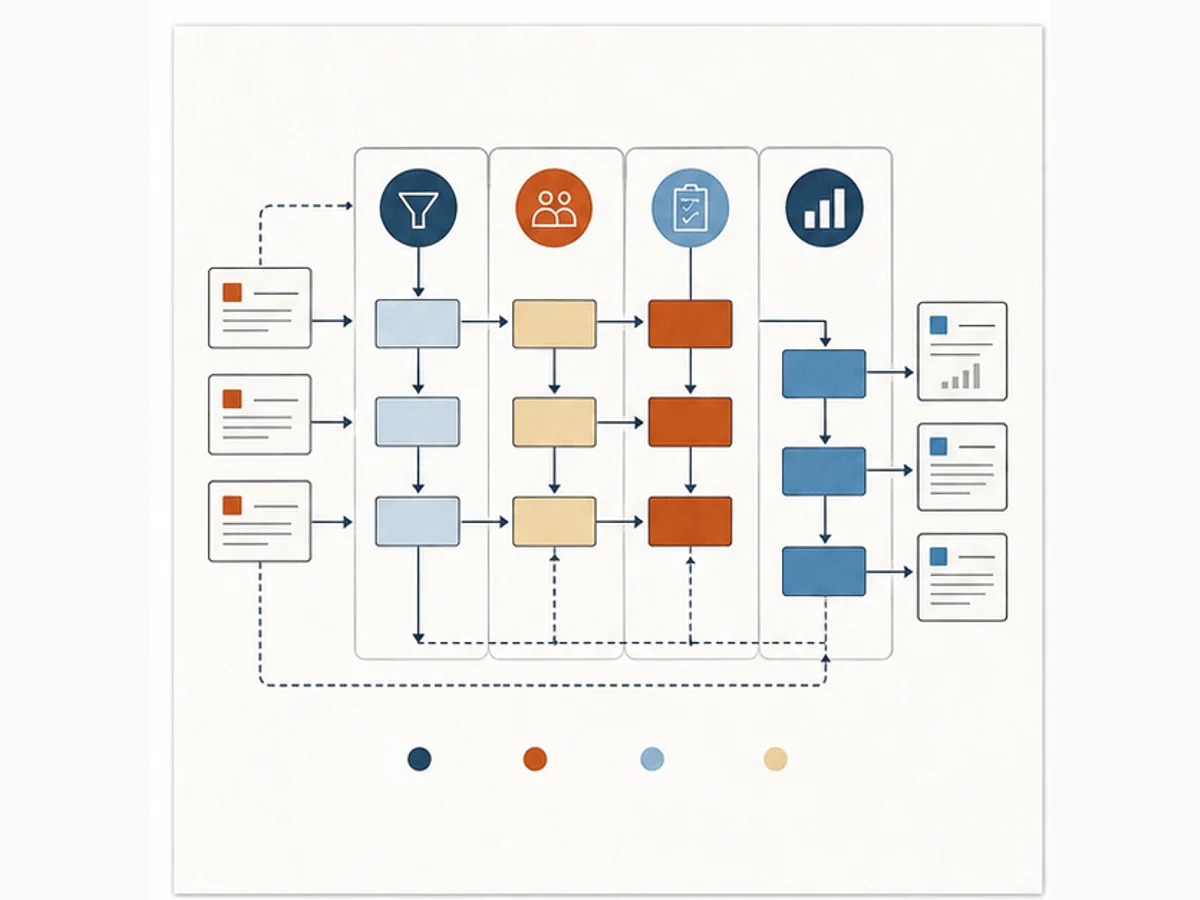
Learning operations turns L&D work into a visible operating system.
Learning operations is the operating layer behind learning work. It includes the intake path, prioritization rules, ownership model, platform decisions, review workflow, content maintenance, reporting definitions, evidence standards, and team routines that help L&D work move without depending on memory.
It is not only project management. It is not only LMS administration. It is not only instructional design process. It is the structure that lets those pieces work together when request volume rises, tools change, reviewers disagree, leaders ask for proof, or a platform migration exposes old decisions.
Most training problems are operating problems first.
A team can build a good course and still have a weak system. Requests can arrive without a named behavior. SMEs can review the wrong decision. The LMS can report completions while leaders ask whether people are ready. AI can speed up drafting while source checks, review gates, and human ownership stay unclear.
Learning operations gives those problems a place to live. Instead of treating every issue as a course request, the team can ask whether the real issue is intake, workflow, documentation, manager support, platform governance, evidence, content maintenance, or ownership.
Use these layers to inspect where the system is weak.
How requests enter, how readiness is checked, how tradeoffs are made, and how the team decides whether training is the right response.
How learning assets are scoped, reviewed, approved, published, maintained, retired, and connected to tasks.
How LMS ownership, reporting definitions, permissions, integrations, migration decisions, and support paths are governed.
How AI supports planning, drafting, review prep, QA, source checks, and summaries without removing human accountability.
How the team chooses evidence that supports decisions about readiness, behavior, adoption, workflow impact, and value.
Start with the smallest operating artifact that changes the work.
The first move is rarely a large operating model. Start with one artifact the team will use this week: an intake worksheet, a decision log, an SME review checklist, a content maintenance tracker, a report definition card, or an AI workflow brief. A small visible artifact is better than a polished process nobody uses.
- Name the repeated friction: intake, review, LMS reporting, content maintenance, AI use, or measurement.
- Choose the smallest artifact that makes the decision visible.
- Use it on one real request or project.
- Write down what changed, what stayed unclear, and what decision needs an owner.
- Only then turn the artifact into a standard.
Learning operations should work before the tooling gets fancy.
Run a 15-minute triage conversation for one request. Ask what task is failing, who performs it, where it fails, what support already exists, and what evidence would show progress.
Use a shared List, Sheet, Doc, or form to capture request status, decision owner, due date, review type, source material, and the next decision needed.
Ask AI to classify requests, draft reviewer questions, summarize source material, or inspect a measurement plan. Keep final decisions, source validation, and risk review human-owned.
The system is working when decisions stop disappearing.
- Requests name the behavior or workflow problem before naming the asset.
- SME review separates facts, workflow judgment, preferences, risk, and approval.
- LMS reports have visible definitions, caveats, owners, and source fields.
- Content has a task, audience, owner, source, review signal, and retirement path.
- AI-assisted work shows source material, allowed tasks, review gates, and a human owner.
- Measurement starts with the decision the evidence needs to support.