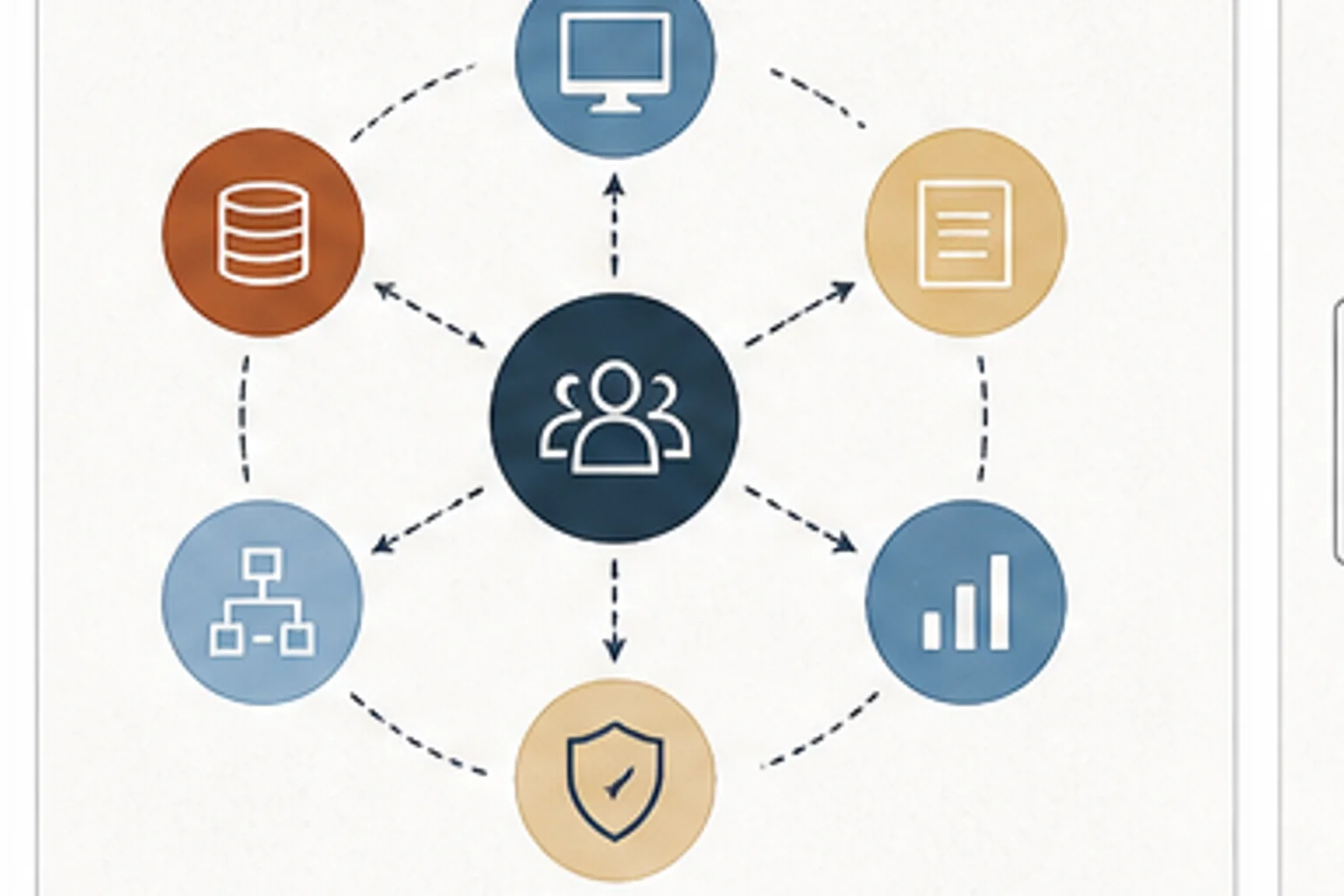
Use this note to think about L&D hiring through the operating systems the team needs to own, not only the assets it needs to produce.
The 26-person global team reference describes the author's prior L&D operating context across multiple countries and roles. It is included to clarify the scale behind the hiring and operating-model guidance.
This feels like every job description asking for someone who can design, build, manage platforms, report data, coordinate projects, and lead change. Then we wonder why the role is hard to hire and harder to sustain.
If every role is treated like a course production role, the team eventually lacks the capacity to manage intake, platforms, data, governance, and partner-team systems.
Hire for the operating model. Separate design roles from LMS administration, project coordination, content operations, measurement, and team leadership.
Look at the systems your team depends on but no one clearly owns.
- Every role looks like course production even though the team has platform, data, and governance needs
- Managers are carrying operational work that should have clearer ownership
- The team is scaling but the operating model is still informal
- What system will this role own?
- Which work is important but currently ownerless?
- Does the team need design capacity, operations capacity, platform capacity, or leadership capacity?
- Open roles that list every L&D skill but do not name the system the person owns
- Managers carrying platform, reporting, and project coordination work because no role has that lane
- Hiring debates that focus on title before the team names the operating gap
- Order-taking intake The requester names the asset first, but cannot name the behavior, audience, workflow, or evidence standard.
- Invisible capacity We know the team is busy, but we cannot show request volume, active work, blocked work, or tradeoffs.
- Governance by memory The same request gets different answers depending on who is asked or who remembers the last decision.
- Map roles to systems, not just deliverables
- Separate instructional design, LMS administration, project coordination, measurement, and content operations
- Write role expectations around ownership, decision rights, and operating outcomes
Before rewriting the job description, make a two-column list. On the left, list the work the team is missing. On the right, name the system that work belongs to.
- No technology Run a 15-minute request triage with four questions: what task is failing, who performs it, where does it fail, and what evidence would show improvement.
- Microsoft 365 or Google Workspace Use Microsoft Lists, Excel, Google Sheets, or Forms to capture request type, audience, status, priority, owner, due date, and decision notes.
- AI-assisted Ask AI to classify requests into training, workflow, documentation, manager support, tool, or measurement issues, then have a human confirm the category before work starts.