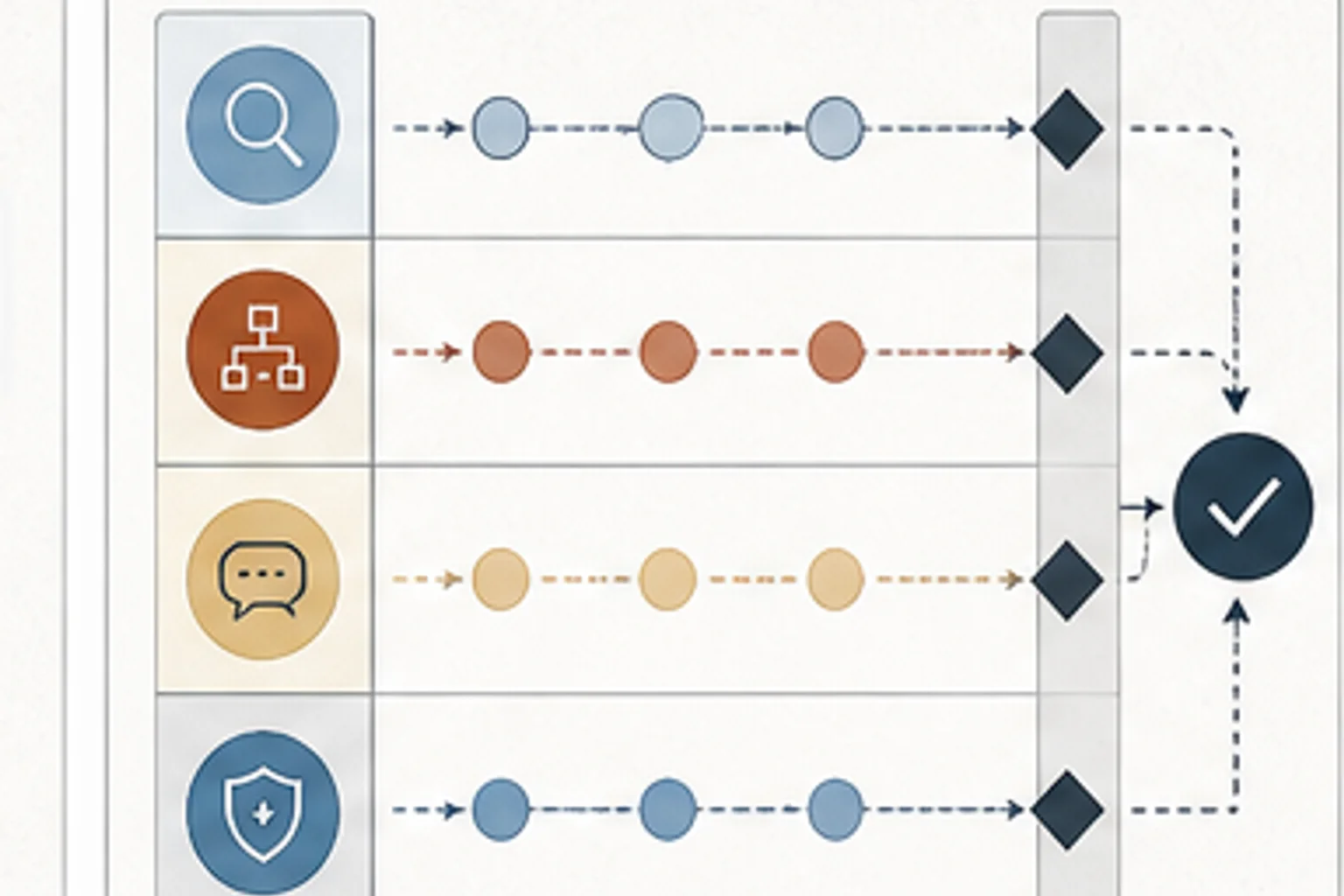
Use this note to turn SME review from a vague approval step into a clear workflow with different decision types, owners, and review standards.
The 6-to-2 week approval improvement came from separating review types, decision rights, and approval expectations in a real L&D review workflow. It should be read as a field example, not a universal benchmark.
This feels like waiting on the SME, but the delay often started before the SME ever saw the draft. We handed them a bundle of decisions and called it review.
SMEs get blamed for slow review, but many review systems ask them to do too many jobs at once: validate accuracy, rewrite copy, approve scope, and catch partner-team concerns late.
Separate review types. Ask SMEs for accuracy and missing context. Ask owners for priority and tradeoffs. Ask editors for clarity. The system gets faster when each person knows what kind of judgment they are being asked to provide.
Look at whether the reviewer is being asked to make factual, workflow, audience, priority, and style decisions in the same pass.
- SME review takes too long or comes back as broad rewrites
- Reviewers mix factual corrections, personal preferences, scope debates, and approval concerns
- Business partners blame SMEs even though the process gives them unclear instructions
- Is the SME being asked for facts, workflow judgment, priority tradeoffs, style feedback, or final approval?
- What decision must be made before the SME sees the draft?
- What does a good SME comment look like in this workflow?
- Review comments that mix fact fixes, preference edits, and scope changes in the same pass
- SMEs asked to approve decisions the project owner should have made earlier
- Late review meetings where everyone is still debating who the content is for
- Course as container One course contains many tasks, many audiences, or many decisions, so learners cannot find the exact help they need.
- Review as rescue SMEs are asked to fix scope, facts, examples, workflow logic, and partner-team concerns late in the process.
- No content lifecycle Assets stay live without owner, review date, retirement rule, or signal that the content is still accurate.
- Separate fact review, workflow review, editorial review, and approval review
- Give SMEs a checklist that names the exact type of feedback requested
- Move priority and partner-team tradeoff decisions before content review starts
For the next review, ask the SME for only one kind of feedback in the first pass. Facts only, workflow accuracy only, or missing context only. See how much cleaner the conversation gets.
- No technology Print or list one course outline and mark every task inside it. Each task becomes a candidate job aid, micro-module, practice item, or reference.
- Microsoft 365 or Google Workspace Use Excel, Sheets, Lists, or a shared tracker for asset owner, task, audience, format, status, review date, source SME, and retirement trigger.
- AI-assisted Ask AI to turn a long course outline into task-based chunks, draft SME review questions, and flag missing practice, accessibility, and maintenance details.