Use this note to understand why AI only improves development speed when it is tied to the workflow around planning, review, handoffs, and production standards.
The 31% cycle-time reduction refers to an internal L&D production workflow where AI support was attached to planning, drafting, review prep, and QA habits. It is an experience-based operating metric, not a claim that tool access alone causes the same result.
This usually feels like progress at the individual level and confusion at the team level. One person is moving faster with AI, another person is still rebuilding project context from scratch, and nobody can quite explain which part of the workflow changed.
Most AI adoption starts with access to a tool. The better question is where the learning workflow is slow, unclear, or dependent on too much manual coordination.
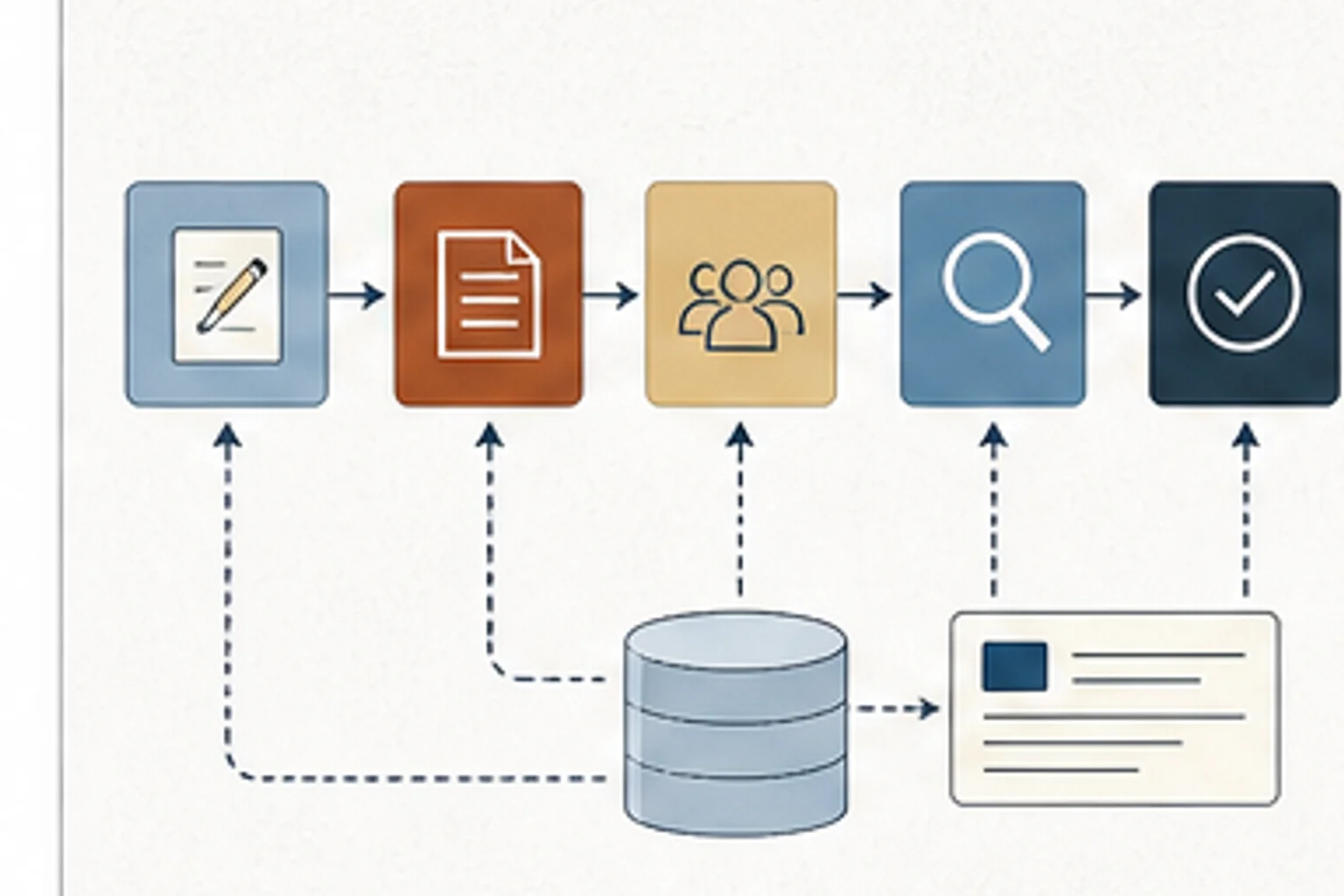
AI became useful when it was connected to planning, first drafts, SME review prep, QA checks, and reusable production context. The workflow changed before the output changed.
Look for repeated handoffs, unclear review requests, duplicated context gathering, and places where every project starts from a blank page.
- AI access exists, but output quality still depends on individual workarounds
- The team is asking for better prompts before it has mapped the process
- Development time is slow because project context gets rebuilt every time
- Which step is slow because the process is unclear, not because the tool is weak?
- Where does project context get recreated instead of reused?
- Who reviews AI-assisted work, and what standard are they using?
- AI drafts that look finished before anyone checks the source material
- Prompt sharing that does not include the workflow, review criteria, or constraints
- Cycle-time gains that depend on one person's habits instead of a repeatable team process
- Prompt-first adoption The team collects prompts, but we still have not defined source standards, review gates, or accountable owners.
- Private productivity gains One person moves faster, but the shared workflow, QA process, and review standard stay the same.
- AI output without evidence Drafts look polished, but reviewers cannot tell which sources were used or what still needs human judgment.
- Map one repeated workflow before adding another AI use case
- Create reusable project context for audience, tone, constraints, source material, and review criteria
- Separate AI drafting from human validation, partner-team review, and publishing decisions
Take one repeated asset type and map the workflow from request to publish. Mark the steps where AI can help, the steps where a person must decide, and the step where quality is checked before anything goes live.
- No technology Write the rules for one AI-supported workflow on paper: allowed tasks, not-allowed tasks, required source checks, review owner, and publish criteria.
- Microsoft 365 or Google Workspace Create a shared Word, Google Doc, or SharePoint page with approved prompts, source checklists, review criteria, and before-after examples.
- AI-assisted Use AI to draft first-pass outlines, SME questions, accessibility checks, and QA checklists, then require human review for facts, tone, risk, and final decisions.